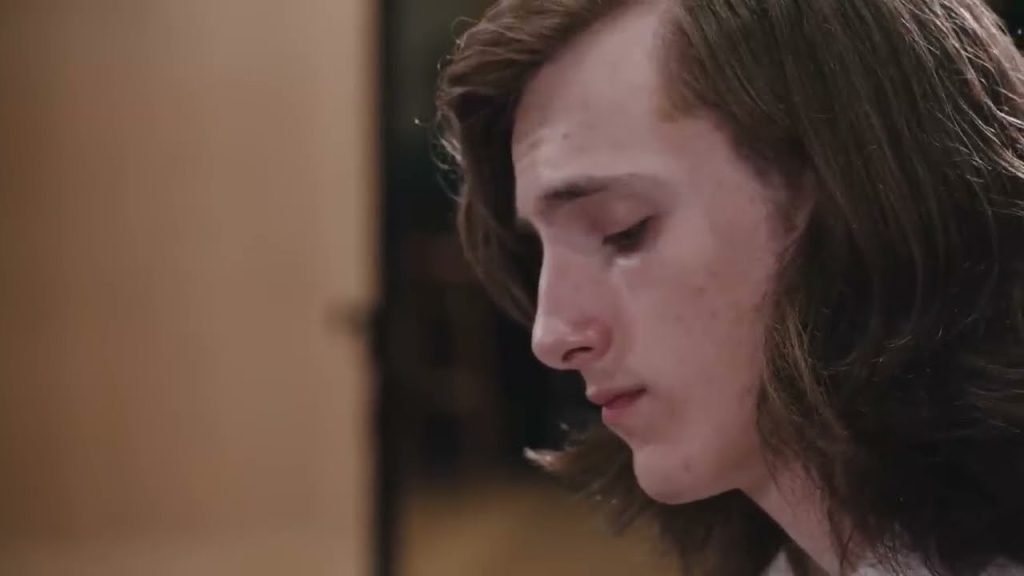
When Chopin offered his new Prelude in C sharp minor, Op. 45, for Mechetti’s Beethoven album, he wrote to a friend, in Frederick Niecks’s translation: “It is well modulated, and I can send it without hesitation.” Yoav Levanon’s debut album gathers music written to help fund a nineteenth-century tribute to Beethoven, so the prelude has come home. Niecks himself heard the piece as “a heedless outpouring when sitting at the piano in a lonely, dreary hour.”
Yoav’s performance takes that improvising spirit at its word. Setting it beside Arturo Benedetti Michelangeli’s 1972 Deutsche Grammophon release is revealing, because Yoav plays every bar as written and takes almost exactly the same time overall, yet spends that time very differently.
He begins more slowly and far more softly than Michelangeli, whose opening bars already carry a fuller sound. The score marks the start Sostenuto and piano, and Yoav’s first phrases feel like a thought only half spoken aloud. In the long crescendo of the middle section he moves forward more urgently than Michelangeli does. Michelangeli broadens there and makes the arrival of that wave the loudest moment of his whole performance; Yoav’s summit is gentler, and this is the one place where the older master’s larger architecture tells most clearly.
The quiet passage that follows is broader and softer in Yoav’s hands, a welcome inwardness. In the forte climax that leads to the fermata, Michelangeli again presses harder. Yoav’s answer comes at the fermata itself (3:18): he lets the held sound fade for far longer than Michelangeli does, so that the music seems to hold its breath. At least one listener in the comments singles out that pause before the cadenza as breathtaking, and it is easy to hear why.
Niecks praised “the piquant cadenza” and its “progression of diminished chords.” Yoav’s cadenza (3:39) is quicker than Michelangeli’s and as strong as anything in his performance, although the score marks it piano, legerissimo e legato. Michelangeli spreads it more widely and keeps it below his own climax. Yoav’s choice is brilliant and full of nerve; Michelangeli’s stays closer to the feathery lightness the marking asks for, and both are persuasive in their own terms.
In the coda, marked smorzando and pianissimo, Yoav moves on more quickly than Michelangeli and plays more quietly, and like him he broadens the final bars into long, still sounds.
The film places a black grand, lid raised, among microphone stands in a wood-floored room, cutting between wide shots and close views of the keyboard. It is unfussy and lets the music lead.