Gustav Kobbé, in The Pianolist of 1907, heard Chopin’s Waltz in A minor, Op. 34 No. 2, not as the abandon of the dance but as an elegy, “the burial of fond hopes.” He also retold Stephen Heller’s story: when Heller named this sad waltz in slow time as his favourite, Chopin answered, “I am glad you like that one, for it also is my favorite.”
Shoma’s performance takes that sadness seriously. Sydney Grew wrote in 1922 that “The piece begins with a tenor melody,” and in Shoma’s opening that left-hand tune unfolds beneath soft chords, broader and quieter than the waltz that follows. When the melody passes to the right hand over a waltz accompaniment (0:28), the pulse quickens and the sound fills out. It is a lovely change of light.
Where the score asks for pianissimo late in the piece, Shoma broadens and softens the line. The music seems to remember rather than repeat.
The finest moment comes after the poco ritenuto near the end. Shoma holds the following bar longer than any other in the performance, and when the opening chords and left-hand tune return at 3:58, the bars stay broad and the sound sinks; the closing bars are the softest of the whole reading. It is a beautifully judged farewell.
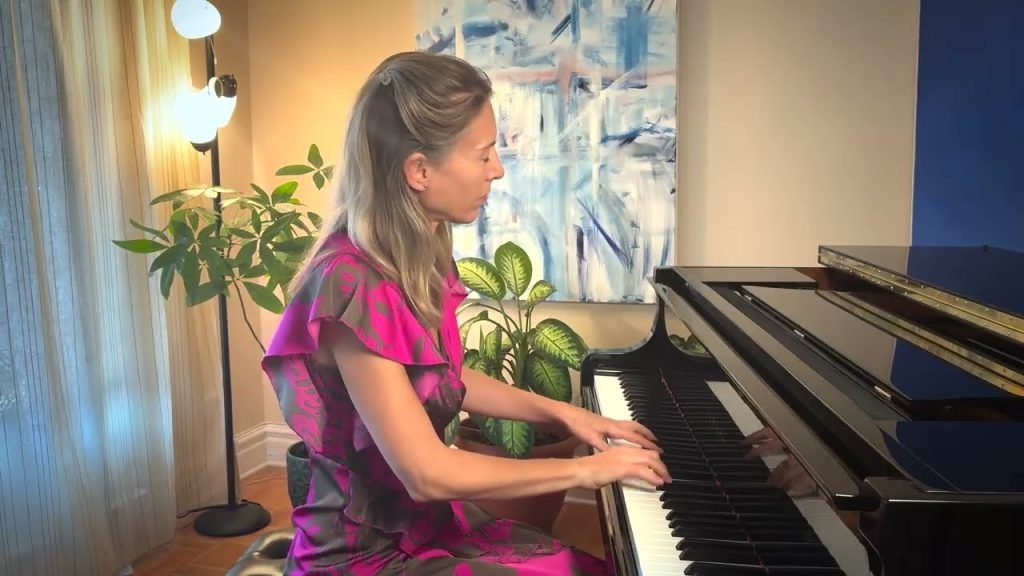
The film, made on a Yamaha grand, dissolves gently between a side view at the piano and a close view along the keys.
Kobbé’s elegy is there in Shoma’s playing, and its last bars fade with real tenderness.